


A good yard needs clear paths.
Not just a strip of material from one spot to another. A path should make the yard easier to use, easier to maintain, and cleaner to walk through after rain.
Urban Lawn & Landscape builds custom paths for Charlotte NC homeowners who want the outside of the home to feel more finished.
That may mean a clean route from the driveway to the backyard, a better connection to the patio, or a path that ties planting beds, seating, and outdoor living areas together.
We do not push poured concrete paths. If you want a hard, flat look, pavers can still give you a strong result without turning the yard into a plain slab.

Paver Walkway Options and Yard Flow
A path should feel like it belongs in the yard.
The shape, width, and material all change how the space works.
A straight route may be best for a clean side-yard access point. A softer curve may fit better near planting beds, a patio, or a fire feature.
Urban plans each walkway project around how people actually move through the property.
Common uses include:
- Connecting the driveway to the backyard
- Creating a dry route to a patio or pool area
- Guiding guests through landscape beds
- Adding a path from a gate to an outdoor seating space
- Cleaning up muddy side-yard access
- Making transitions between patio features feel intentional
A paver walkway can be formal or simple. It can match the patio, contrast with surrounding stone, or stay quiet so the planting and seating areas stand out.
The goal is not to add a random strip through the grass. The goal is to make the layout easier to use.
That matters in tight side yards, sloped backyards, and older properties where people have been walking the same muddy route for years.
A well-placed pathway can also protect turf and mulch because foot traffic is not cutting across the same soft spots every week.
Want the path to fit the whole yard? Call Urban at (980) 616-4048 for a free quote.
Professional Installation Without Poured Concrete
A path looks simple when it is finished, but the work beneath it determines how long it lasts.
Professional installation starts with the route. Urban looks at the grade, drainage, soil, access, and nearby features before any material is set.
That is especially important around Charlotte, where clay soil and heavy rain can expose weak prep fast.
A clean path may need:
- Excavation to the right depth
- Compacted aggregate under the finished material
- Edge restraints that keep the shape from spreading
- Sand or setting material suited to the product
- Drainage planning so water does not sit in the path
- Careful cuts around curves, steps, beds, or patio edges
This is where a step-by-step paver installation process matters. If the base is rushed, the finished path may settle, shift, or hold water in low spots.
Urban can build with pavers, natural stone, gravel, stepping stones, and mixed materials depending on the look and use of the yard.
The one thing we are not trying to sell here is a poured path.
Some homes need a concrete walkway, but Urban is better positioned for paver, stone, and landscape-tied paths that look like part of the yard instead of a basic sidewalk.
A sidewalk installation mindset can be too rigid for a backyard. The better plan is to match the material and layout to the space.
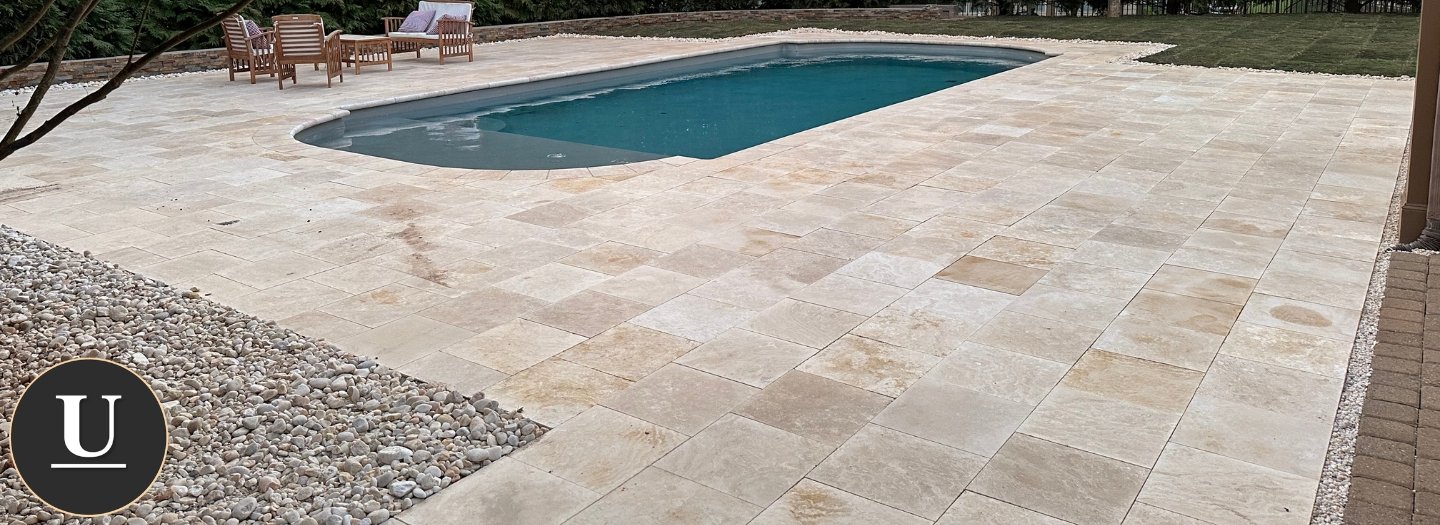
If the path sits near a patio or other built feature, the installation walkway details should line up with the surrounding work so the whole area feels connected.
Base Preparation That Holds Up
Base preparation is the part most homeowners never see.
It is also the part that usually causes problems when it is done wrong.
A path can fail because of poor compaction, thin base material, weak edging, bad drainage, or a layout that sends water toward the wrong areas.
The top layer may look good at first, then start moving after the first few seasons.
Urban treats the prep like part of the finished product.
Before building, the crew looks at:
- Where water currently flows
- Whether the ground is soft, sloped, or compacted
- How much foot traffic the path will handle
- Whether steps or small grade changes are needed
- How the path meets the driveway, patio, turf, and planting beds
- Whether lighting or future outdoor work should be planned now
This is also where design choices matter.
A narrow path may save space, but it can feel awkward if people carry coolers, tools, or chairs through it. A wide path may feel premium, but it can overpower a small planting area.
The best choice fits the way the home is used.
For a front entry, the path should feel clean and welcoming.
For a backyard, it may need to handle kids, guests, pets, and routine yard work.
For larger backyard projects, the path should help people move between the grill, seating, fire area, and house without cutting through the grass.
Good landscape design is not just plants. It is the way everything connects.
Walkway Repair, Steps, and Existing Paths
Sometimes an old path can be repaired. Sometimes it should be rebuilt.
Walkway repair may make sense when the issue is small: a few loose pavers, minor settling, a lifted edge, or a section that needs to be reset.
But if the base is bad, the drainage is wrong, or the layout never worked in the first place, patching the visible problem may waste money.
Urban can look at the existing path and give a practical direction.
Signs the project may need more than a small fix:
- Low spots that hold water
- Edges spreading into the lawn
- Pavers or stones rocking underfoot
- Grass or weeds pushing through large gaps
- A route that forces people to walk around furniture or beds
- Steps that feel uneven or unsafe
Walkway Repair, Steps, and Existing Paths
A poured look is not the only option.
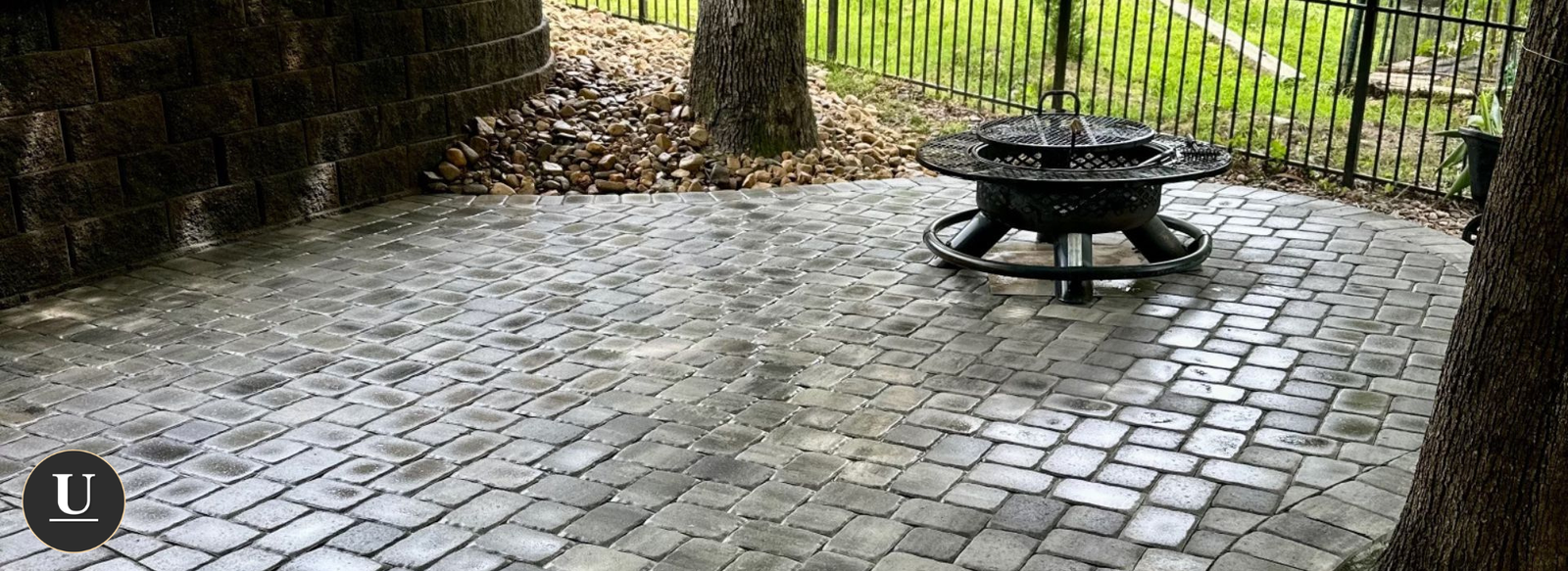
Concrete pavers can give the clean, structured feel many homeowners want while still allowing better pattern choices, easier future repairs, and a more custom fit with the rest of the yard.
Stone can feel more natural near planting, trees, and water features. Gravel can work for casual walkways or lower-traffic transitions when it is edged correctly.
For some homes, the best answer is a mix.
Pavers near the patio, stepping stones through planting beds, and gravel in a side access area can all work together if the layout is planned as one outdoor system.
Charlotte Layouts and Service Areas
Urban keeps the process straightforward.
- Walkthrough — We look at the yard, access points, slope, drainage, and how you want to move through the space.
- Material direction — We talk through pavers, stone, gravel, edging, steps, and how the path should connect with the surrounding landscape.
- Layout and proposal — You get a clear scope for the path, prep, tie-ins, and cleanup.
- Build — The crew handles excavation, base work, setting, edging, and finish details.
- Final review — We walk the finished path with you and make sure it fits the way the yard is used.
Urban serves Charlotte and nearby communities including Mint Hill, Matthews, Indian Trail, Waxhaw, Weddington, Marvin, Ballantyne, Huntersville, Concord, Davidson, Mooresville, and the Lake Norman area.
The right path can make a yard feel more complete without turning it into a huge project. Well-planned walkways are small details that change how the whole space feels.
It can clean up muddy access, make a patio easier to reach, protect lawn and mulch, and give guests a clear route through the outdoor areas.
If you already have photos of the space, bring them to the estimate. Photos help show the access points, soft spots, existing materials, and the way people currently move through the yard.
Get Your Free Quote
If your yard needs a cleaner route between the house, patio, gate, planting beds, or backyard features, Urban can help map the path and build it correctly.
Call (980) 616-4048 or request your free quote to start planning.