


Repeated puddles, muddy side yards and washed-out mulch are signs to look at how water reaches and leaves your property.
We install French drains for Charlotte homeowners with persistent wet areas. Before choosing a buried drain, we separate roof runoff, low spots and slow water movement through Piedmont clay soil so the proposed work addresses the cause.
Why French Drains Work in Charlotte Yards
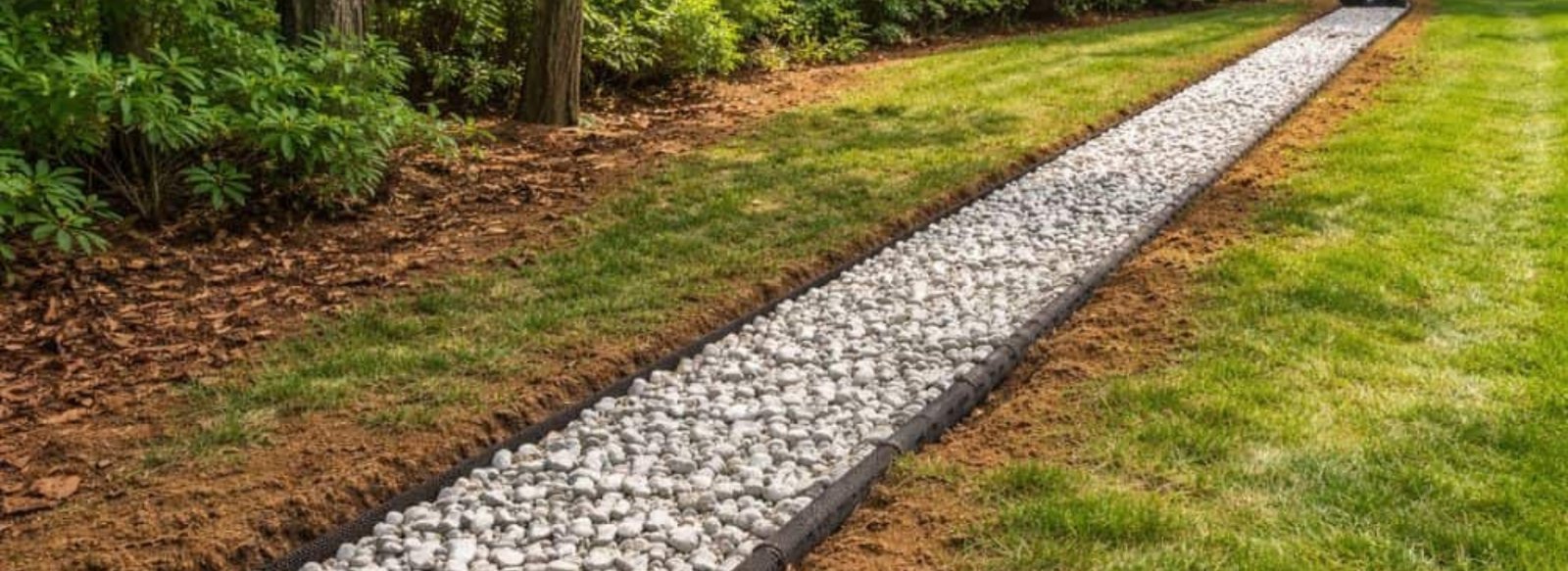
A French drain collects water through a gravel-filled trench and carries it along a sloping pipe to an outlet.
Instead of letting water sit in low spots, the system uses a trench, gravel, fabric, and perforated pipe to collect and carry it away from the area causing trouble.
Clay-rich Piedmont subsoil can drain slowly, especially after construction traffic has compacted it. We check how water reaches the wet area and whether it can enter the drain and flow to the planned outlet.
A French drain can help when water keeps collecting:
- Along the side of the house
- Behind a retaining wall or patio edge
- Near low planting beds
- In a muddy walkway or gate area
- Around a basement entry or crawl space wall
- Where groundwater is keeping the soil persistently wet
This is why yard drainage has to be planned before the trench is dug. If the route is too shallow, too flat, or aimed at the wrong outlet, the water may simply move from one bad spot to another.
Fully wrapped French drains can be installed to help keep dirt out of the gravel and pipe, which gives the system a better chance to keep working over time.
Not sure if a buried drain is the right fix? Call Urban at (980) 616-4048 for a free walkthrough.
Drainage Problems This Can Fix
A French drain is not the answer for every wet spot. Surface runoff from a patio or downspout needs a different collection plan from water held in saturated soil.
We check three things during the property visit:
- Source: Is water coming from a roof outlet, crossing the yard or collecting over compacted clay? Grading addresses surface levels; a buried drain addresses water that can reach its trench.
- Route: Existing tree roots, planting beds, gates and hardscape edges affect where we can dig and how we restore the surface.
- Outlet: The pipe needs a continuous route to a suitable discharge point. Moving water to another low spot does not solve the problem.
We plan those connections before digging so the finished work fits the lawn and landscape around it.

Signs Water Is Reaching the Foundation
Water near the foundation deserves attention.
You may notice soft ground beside the home, mulch washing away, standing water after rain, or damp smells around a basement crawl area.
If water keeps pressing toward the house, it can lead to moisture issues and damage over time.
Urban does not sell foundation repair or crawlspace remediation as the main service. But we do pay attention to those warning signs because the outside water path often affects what happens near the home.
A French drain can move water away from sensitive areas when the grade and discharge route make sense.
If the issue is deeper interior waterproofing, a pump connection, or inside-the-home work, that should be handled by the right specialist. Urban’s role is the exterior yard and landscape side of the problem.
Our Installation Process
The install starts with a practical plan.
Urban checks the slope, access, ground conditions, exit point, nearby beds, and anything that could be affected during digging. Then the crew maps the trench so the finished route works without making the yard feel torn apart.
Good installation is not just about burying pipe. The pitch has to be right, the pipe needs a clean path, and the exit point needs to make sense.
A typical project may include:
- Marking the route and protecting nearby areas
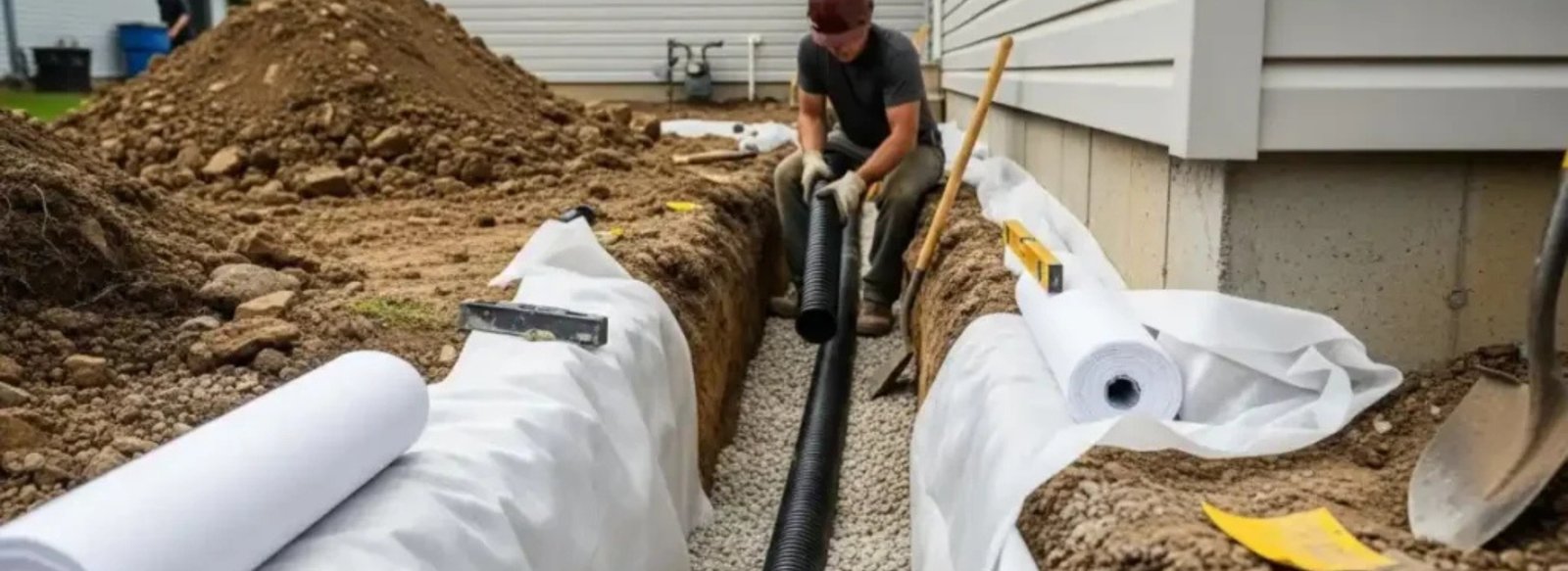
- Digging the trench to the needed depth and pitch
- Adding fabric, gravel, pipe, and more stone around the system
- Wrapping and backfilling the trench
- Cleaning up the surface and tying the work back into the landscape
The finished area should be left neat, not like a utility trench running through the yard. Some drainage systems fail because they ignore the way people move through your yard.
That is why Urban treats this as landscape work, not just trench work.
Average French Drain Installation Costs
The total depends on the length, access, depth, ground conditions, discharge point, and how much cleanup is needed after the work.
A short side-yard fix is different from a longer run that has to move around beds, patios, roots, fences, or grade changes.
| Cost Factor | Why It Matters |
|---|---|
| Length of run | Longer routes need more digging, pipe, gravel, and labor. |
| Access | Tight gates and narrow side yards slow the work down. |
| Discharge point | Water needs a safe place to exit without creating a new issue. |
| Landscape repair | Sod, mulch, rock, and bed edges may need to be reset after install. |
Urban will not price it blindly from a photo.
The better move is to look at the water path in person and give a quote based on the actual yard.
Get a Free Quote
If the same wet spot keeps coming back, do not keep covering it with more mulch or hoping the next storm is lighter.
Urban Lawn & Landscape can look at the property, explain the likely cause, and recommend the right exterior fix.
Call/text (980) 616-4048 or request a free quote for French drain services in Charlotte NC and the surrounding area.
Check out our Sod Installation services in Charlotte NC
 Mint Hill