
Paver Patio Cost in Charlotte, NC
Plan around $15–$35+ per square foot for standard patio installation. The bigger question: what does your backyard need before the first stone goes down?
By Urban Lawn & Landscape · October 2026
Our work: Lakefront Luxury RetreatWhat Should You Budget per Square Foot in Charlotte?
A 20-by-20-foot paver patio in Charlotte gives you 400 sq ft to work with. At an installed rate of $15–$35, that puts the starting installation cost around $6,000–$14,000. Premium stone, major drainage work and built-in features can take it higher. Your project’s final cost depends on the materials, layout and ground conditions.
Why do paver patio costs vary so much? Picture two backyards. One is flat, with open access from the driveway. The other has a narrow gate, an old slab to remove and water sitting where the new surface needs to go. The finished spaces could look similar. Getting them built is a different amount of work.
Is that just the price of the stones? No. An installed budget covers the work that makes them usable: digging, base preparation, laying, cutting, edging and joint filling. A material-only cost on a supplier’s website leaves most of that out.
Paver Patio Budgets by Size
Start with what you want to fit outside. A couple of chairs need less room than a dining table, grill and lounge seating. Mark the outline on the lawn, put the furniture inside it, then pull the chairs back. Still enough space to walk through?
| Dimensions | Size | Budget |
|---|---|---|
| 12 × 12 ft | 144 sq ft | $2,200–$5,000+ |
| 16 × 20 ft | 320 sq ft | $4,800–$11,200+ |
| 20 × 20 ft | 400 sq ft | $6,000–$14,000+ |
Why isn’t a small installation always cheap? Equipment still has to arrive, materials still need delivery, and a crew still has to prepare the ground. That setup cost is spread across fewer square feet. A compact space with difficult access can therefore have a higher rate than a larger, straightforward build.
What Changes the Installation Cost?
The pavers are the part you’ll see every day. Site prep and the access route often explain the difference between two estimates.
Can equipment reach the work? A wide route lets machines move soil and aggregate efficiently. A tight gate can turn that into repeated wheelbarrow trips. The same amount of material still moves; it just takes more time and labor.
Where does the water go? In a clay-heavy Charlotte yard, rain can sit above slow-draining soil. Covering the wet spot with paving doesn’t solve it. We plan finished heights and runoff before building the base, and install drainage improvements where the yard needs them.
What has to come out first? Removing grass is one job. Breaking up an existing slab, loading it and hauling it away is another. Roots, buried debris and unsuitable fill can add work below the surface too.
Is the yard level with the back door? A drop in elevation may call for steps or a retaining edge. We build those connections into the plan so you get a comfortable route outside, not a good-looking surface with an awkward step down.
Your Materials and Pattern Make a Difference
Standard concrete patio pavers offer a wide choice of colors and textures without starting at the premium end of the budget. Natural stone, including travertine and flagstone, brings a different finish, thickness and setting requirement. We help you choose around the house, the way you’ll use the space and the amount you want to spend.
Then there’s the layout. Long, straight edges are relatively efficient. Curves, contrasting borders and detailed inlays mean more measuring and cutting. A simple field with a carefully chosen border can give you the finished look you want without paying for a complicated pattern everywhere.
Does a premium material automatically make a better build? No. An expensive stone still needs solid support, restrained edges and the right drainage. Put money into those fundamentals before stretching the budget for a different color or finish.
What Happens Underneath Matters
A smooth finished surface starts below your feet. We excavate to suit the site, prepare the ground, compact the gravel base and establish the bedding layer before laying the units. Edging holds the perimeter in place; joint material fills the spaces between them.
That sequence matters. Loose or uneven support can leave a dip under a chair leg or a puddle beside the door. More sand on top is not a substitute for correcting the base underneath.
For a complete project, the estimate should identify the selected material, excavation and base work, laying pattern, edge restraints, joint finish and cleanup. Check removal, drainage corrections and restoration around the edges as well. Those items should be priced clearly instead of appearing as surprises halfway through.
From a Seating Area to an Outdoor Room
A fire feature changes where people gather. A seat wall adds permanent seating. Lighting makes the space usable after sunset. Those are worthwhile additions, but each brings more than a line on a drawing.
- Steps and walls: footings or base work, masonry, caps and changes in elevation.
- Fire features and cooking areas: the structure, appliances and any required utility connections.
- Lighting: fixtures, wiring, controls and installation.
- Surrounding landscaping: beds, planting, sod and finishing around the new hardscape.
Planning to add a kitchen or shade structure later? Tell us now. Leaving a sensible route for utilities and allowing for the right foundations is easier before the paving is finished. We plan the whole project, then separate the work into phases that fit your budget.
See How Different Backyards Come Together

At Twilight Terrace, the space accommodates both meals and a place to sit afterward. That calls for room around the furniture as well as between the two zones.
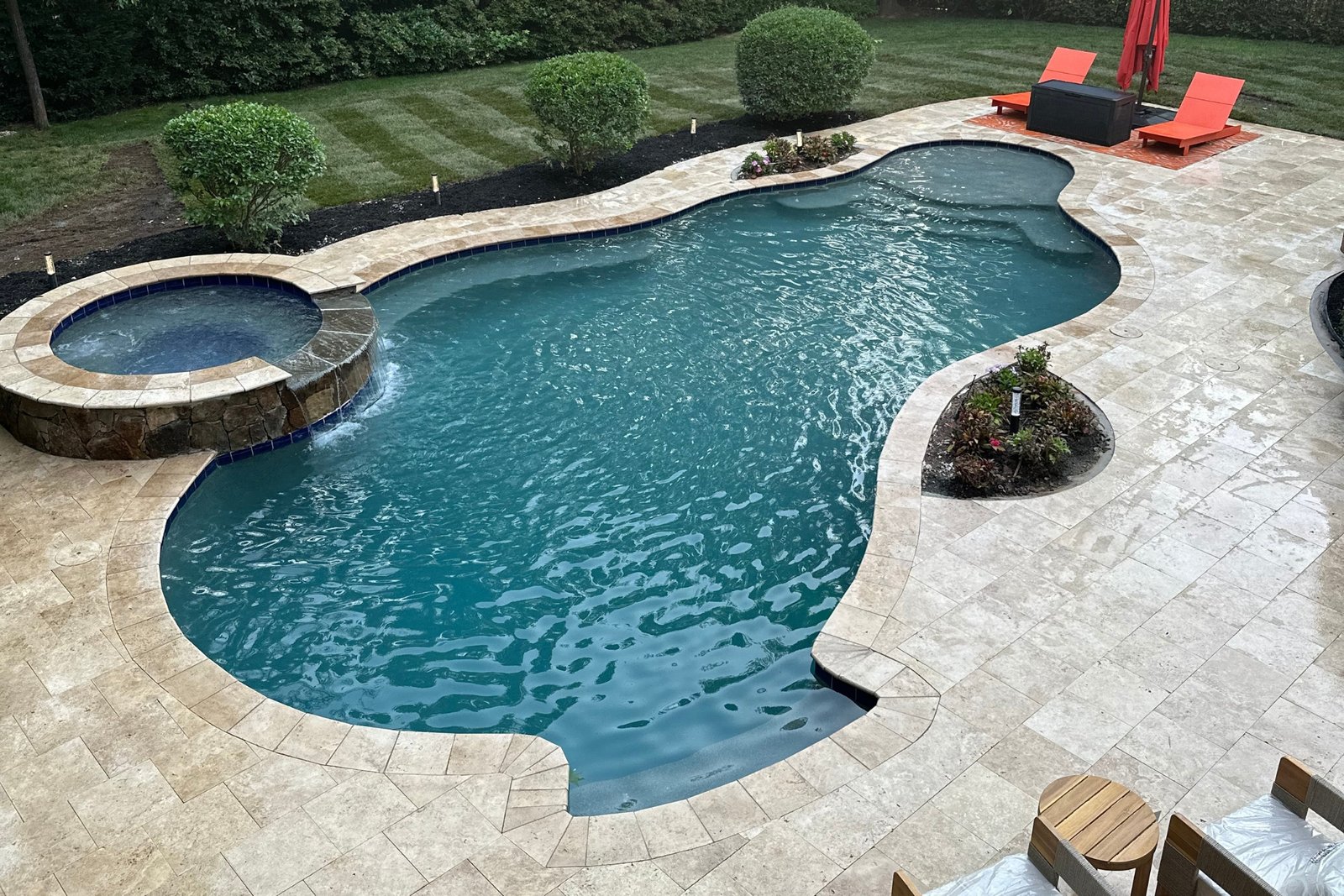
Our Mint Hill installation takes a more compact approach beside an existing screened porch. The Lakefront Luxury Retreat, shown in the opening photo, uses travertine around curved pool edges and planted islands. Material selection and all those transitions change the work involved.
Which is closest to what you have in mind? Our patio design and installation services cover a simple place to sit through a connected backyard with steps, walls and gathering spaces.
Are Pavers Worth More Than Basic Concrete?
A basic poured slab often costs less upfront. Individually laid units give you more control over patterns, borders and color combinations. They also let you lift and reset a localized section when repairs are needed, rather than patching a continuous slab.
When a section settles, resetting the units and correcting the support beneath them deals with both the appearance and the cause. For a fair price comparison, keep the dimensions, removal work and drainage the same, then compare the finish and future care you prefer.
Look beyond the cheapest opening number. The right choice is the one that fits your home and budget without leaving out the preparation it needs. Explore our paver installation options for other ways to connect the space.
Where Can You Save Without Cutting Corners?
Start with the layout. Keep the room you’ll actually use; simplify extra curves, small offsets and decorative cuts. Compare standard finishes before committing to a premium collection. A good-looking result does not require the most expensive product in the catalog.
Next, separate the essentials from the additions. Build the surface, drainage and necessary steps properly. A decorative seat wall or additional lighting can be a later phase when the plan allows for it. Settle the selections before materials are ordered to avoid paying for changes and waste.
Where shouldn’t you save? Beneath the paving. Reducing necessary excavation or compaction leaves the finished surface resting on the same problem ground. Spend there first.
How Do You Compare Two Estimates?
Put the material, size and included work side by side. Some contractors include demolition, hauling and restoring the lawn edge; others price those separately. Ask your contractor for the total with the same work included.
Then ask two questions: What could change this price? And how will changes be agreed before the work happens? You’ll learn more from those answers than from a low headline number alone.
A Few More Questions Before You Build
Can pavers go over my existing slab?+
Sometimes. The slab needs to be stable, and the added height must work with doors, steps and drainage. We inspect those details first. If the old surface is moving or already sends water toward the house, covering it would carry the problem into the new installation.
How long will the work take?+
A straightforward installation is generally measured in days rather than weeks. Demolition, walls, drainage corrections and complex layouts extend the schedule. We set out the expected duration with your proposal and account for weather and material availability.
Can you work around an existing deck or screened porch?+
Yes. We connect the new surface to the existing structure, with finished heights, stairs and water flow planned together. Bring photos of the doorway and steps as well as the yard when you contact us.
Do I need HOA approval or permits?+
Check your neighborhood’s approval process before scheduling construction. Local requirements depend on the complete build, particularly when it includes structures, retaining walls or utility work. Share any survey or HOA requirements with us at the planning stage.
What Our Customers Say
Let’s Build the Backyard You Have in Mind
Planning a backyard in Charlotte or a nearby North Carolina community? Send your dimensions, inspiration photos or a picture of the space. We’ll look at your property, talk through the options and put together your free quote.
Call (980) 616-4048Also working nearby
Request your free quote
Share your contact details and the work you need.